
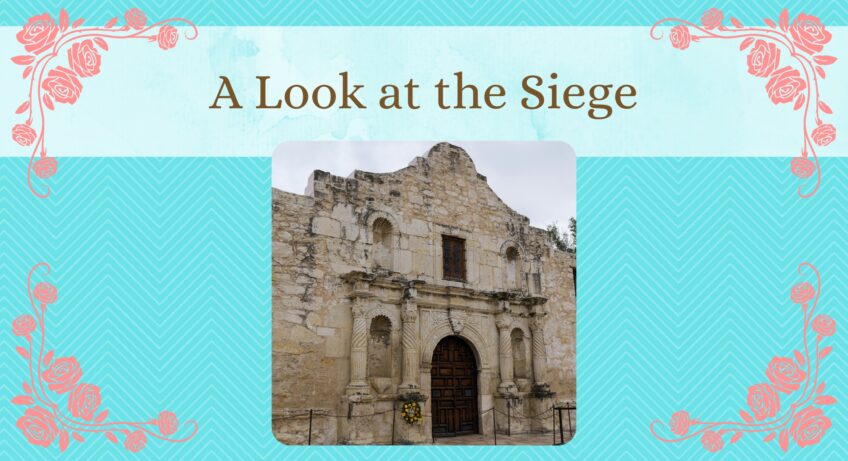
We’re nearing the end of the launch tour, which coincides with the 190th anniversary of the siege of the Alamo. So today’s post is going to be a day-by-day look at the siege of the Alamo and events relating to the siege.
February 23, 1836
Early on the morning of February 23rd, the men of the garrison in Béxar noticed an unusual occurrence in the town. The townspeople were leaving in droves. The streets were clogged with wagons and carts as most of the people fled the city.
Members of the garrison at once guessed the cause for this. The Mexicans must be arriving. Colonel Travis posted a lookout in the tower of the San Fernando Church. He also sent out two scouts on horseback to see what they could learn. Soon, news quickly spread through the garrison: the vanguard of the Mexican army was in sight.
The Texians stationed in Béxar promptly began moving from the town into the Alamo. They scoured the area, searching for food, for they had little. Besides managing to drive in about thirty head of cattle, they also located several sacks of corn, left in an abandoned hut.
Confusion reigned amongst the men of the garrison, for they had not expected the Mexicans quite this soon, and the night before they had been out late celebrating Washington’s birthday. Few of the men seemed to know what they ought to be doing.
In the midst of the confusion, a few women and children sought shelter inside the fort, taking refuge inside the chapel in one of the rooms with a roof. It just so happened to be the room that served as the powder magazine.
Travis hastily sent out two messengers to inform the government leaders what was happening and to request that they send men to his aid.
The Siege of the Alamo begins
As the Mexicans began entering the town, Travis and Bowie sent messengers out to learn what terms Santa Anna would offer them. They returned saying that he would accept nothing but unconditional surrender. Travis promptly ordered the largest cannon in the garrison to be fired to show the Mexicans what their answer was: battle.
From the tower of the church, lately occupied by Travis’s lookout, a red flag fluttered in the breeze. The men in the Alamo understood the meaning of this flag. It meant that they would receive no quarter, could expect no mercy.
And so, with the Texians inside the Alamo and the Mexicans outside, growing ever closer, the siege of the Alamo had begun.
February 24, 1836
On February 24th, the siege of the Alamo began in earnest. The Mexicans opened fire on the Alamo, and the Texians and Tejanos inside returned their fire. Busily, the Mexicans built earthworks and other fortifications, moving ever closer to the fort.
During the day, news quickly spread through the garrison. For some time, Jim Bowie had been sick. But now he had taken a turn for the worse and could no longer leave his cot. Realizing that he was now of little use in the fight, he made the decision to resign his position as co-commander, and he turned full command over to Travis.
For the remainder of the siege, Bowie could do little in the fight, and he was looked after by his deceased wife’s two adopted sisters, Juana Gertrudis Navarro Alsbury and Maria Gertrudis Navarro, who had sought shelter in the fort when the siege began.
While it is unfortunate that Bowie became so sick, perhaps his sickness was for the overall good of the garrison, for there were no longer two leaders and two factions. Now, all the men were united under one commander.
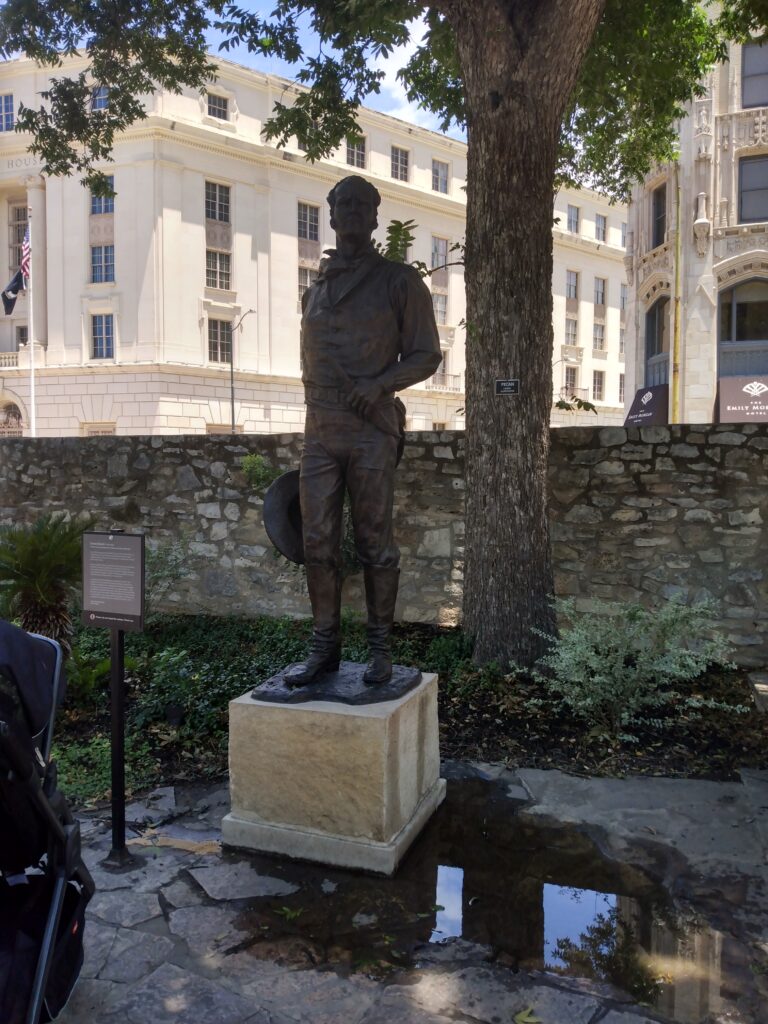
Victory or Death
Also on this day, Travis wrote a plea for help that was destined to be remembered for generations:
Commandancy of the The Alamo
Bejar, Feby. 24th. 1836
To the People of Texas & All Americans in the World-
Fellow Citizens & compatriots-
I am besieged, by a thousand or more of the Mexicans under Santa Anna—I have sustained a continual Bombardment & cannonade for 24 hours & have not lost a man—The enemy has demanded a surrender at discretion, otherwise, the garrison are to be put to the sword, if the fort is taken—I have answered the demand with a cannon shot, & our flag still waves proudly from the walls—I shall never surrender or retreat. Then, I call on you in the name of Liberty, of patriotism & everything dear to the American character, to come to our aid, with all dispatch—The enemy is receiving reinforcements daily & will no doubt increase to three or four thousand in four or five days. If this call is neglected, I am determined to sustain myself as long as possible & die like a soldier who never forgets what is due to his own honor & that of his country—Victory or Death.
William Barret Travis.
Lt. Col.comdt.
P. S. The Lord is on our side—When the enemy appeared in sight we had not three bushels of corn—We have since found in deserted houses 80 or 90 bushels and got into the walls 20 or 30 head of Beeves.
Travis
After writing this letter, he gave it to Captain Martin of Gonzales, with orders to carry it to that town. Shortly after the captain had left, he heard the first roar of artillery and knew that the battle had begun in earnest.
February 25, 1836
In the afternoon of the 25th, Captain Martin reached Gonzales. Before giving the letter to the next courier, he added this postscript to the letter:
Since the above was written I heard a very heavy Cannonade during the whole day. think there must have been an attack made upon the alamo. We were short of Ammunition when I left Hurry on all the men you can in haste…
When I left there was but 150 determined to do or die tomorrow I leave for Bejar with what men I can raise & will be there Monday at all events – –
Col Almonte is there the troops are under the Command of Gen. Seisma.
Captain Martin passed the letter on to Lancelot Smither, who would carry the letter on to San Felipe to the government leaders. Smither, too, added his own postscript:
I hope Every One will Rendevu at gonzales as soon as poseble as the Brave Solders are suffereing do not neglect the powder. is very scarce and should not be delad one moment
Copies of this letter appeared in newspapers in both Texas and America. Because of this stirring appeal for help, more men from America flocked to the cause of liberty. But would they arrive in time?
February 26, 1836
On the night of the 25th into the 26th, a winter storm known as a norther began. The norther brought bitterly cold north winds and low temperatures. The men in the garrison were all dressed in rags, so the conditions were miserable for them.
The day before, the Mexicans had taken shelter behind some huts in an area close to the Alamo known as La Villita. Here they had fired upon the Texians at close range until the Texians drove them off and burned the huts closest to the walls of the Alamo.
Now, the garrison quartermaster instructed some of the men to return to La Villita under cover of darkness and tear down more of the huts. Instead of burning them, they were to bring the wood into the Alamo for them to use as firewood. The men eagerly did as they were told, then burned a few more of the huts.
Once daylight arrived, the day passed quietly for the Texians. The Mexicans kept up a continual bombardment, but the men only returned their fire when they had a sure opportunity for not wasting any ammunition.
Water began running low, so some of the men left the safety of the fort to go to the nearby irrigation ditches for water. And still the norther blew, the men of the Alamo bombarded by the frigid temperatures as well as the guns of the enemy.
February 27, 1836
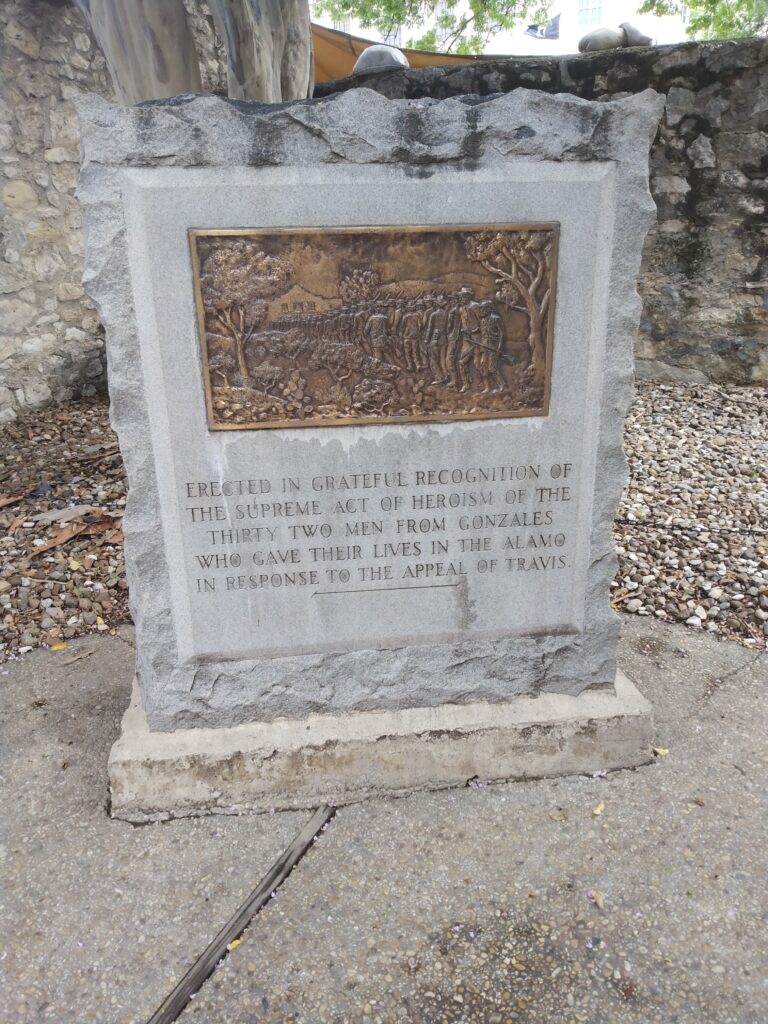
Ever since the news of the Mexicans arrival had reached Gonzales, a group known as the Gonzales Mounted Ranging Company had been preparing to go to the aid of the men holed up in the Alamo. This ranging company, and others like it formed during the war, was the forerunner to what we today know as the Texas Rangers.
On the 27th of February, a group of around 30 or so men, known today as the Immortal 32, rode out of town, knowing that they would probably never return and never see their families again. Many of them were husbands and fathers. Two, at least, had unborn children they knew that they would likely never get to see and hold.
Other members of this company were boys, some as young as fifteen and sixteen. In some instances, at the last minute the father chose to go in place of the son, and in others, the son chose to go so the father could remain with the family.
Some had fought in the Battle of Béxar and had returned home afterward, while Captain Martin, Travis’s courier, had only left three days before. He knew just how desperate the conditions were, but he chose to return, to die with his comrades rather than forsake them.
Bravely, the men left. And bravely, their mothers, wives, sisters, and children remained behind, hoping that their loved ones would return safely.
February 28, 1836
By this point in the siege of the Alamo, morale was lagging. So far, no one had responded to their appeals for help. They did not know of the men from Gonzales who were even then on their way.
The men of the garrison also hoped for help from Colonel Fannin and the 400 men garrisoned at La Bahia, a fort just outside of Goliad. They did not know that Fannin had already attempted to come to their aid but had turned back because the artillery became mired in the mud and he did not think they had adequate supplies.
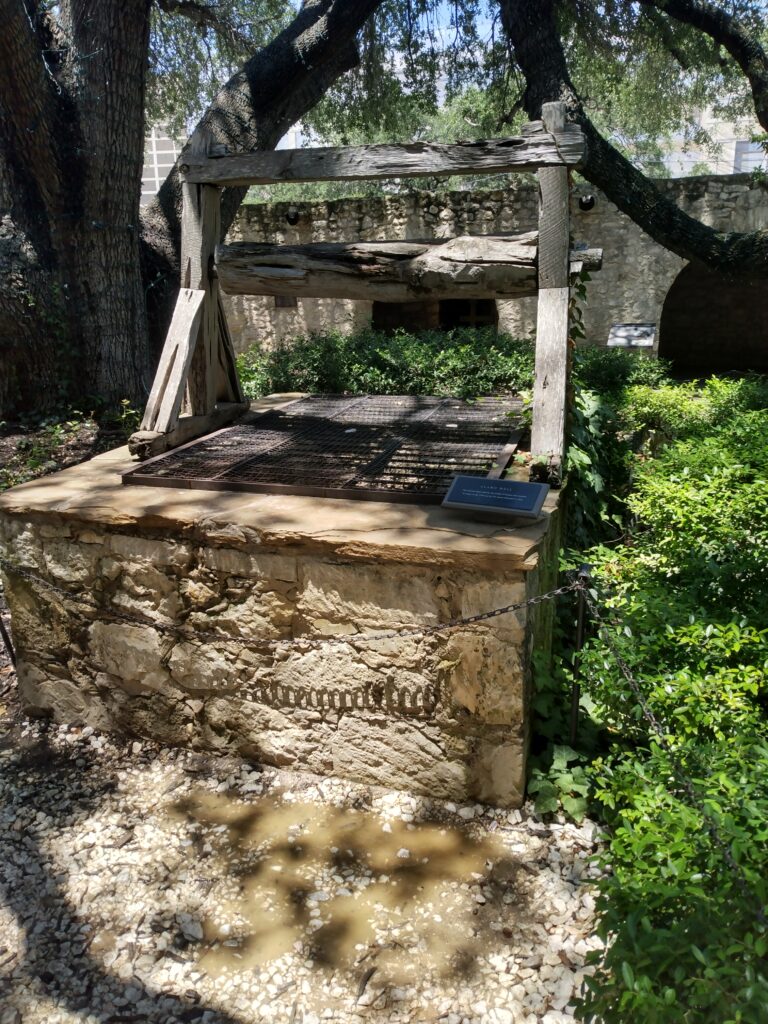
On the previous day, the Mexicans had stopped the irrigation ditches flowing through and around the Alamo compound. For the remainder of the siege, the garrison would only have the little water from the two wells, one of them only completed after the ditches were dry.
To add to the misery of the men, a norther had been blowing for several days now, chilling the men in their ragged clothing. Today, a cold drizzle fell. The men scarcely had a moment to be out of the elements by a warm fire, and the scarcity of food made the bad weather even harder to bear.
In the afternoon, several men carried Bowie on his cot out into the courtyard. There, he exhorted the men to stand firm, to fight their hardest. To see their leader, who was suffering so terribly, still so cheerful greatly lifted the spirits of the men. They would fight their hardest. They would do their best to hold the Alamo, no matter what the final results were.
February 29, 1836
At this point, scouts brought word to the Mexicans that Colonel Fannin and the three hundred men in his command had left Goliad and were coming to the aid of the men of the Alamo. A body of soldiers was sent out to intercept these reinforcements. However, the Mexicans did not know that Fannin had already returned to Goliad.
March 1, 1836
The night of February 29th into the 1st of March was dark. The sentries on the walls of the Alamo were alert and watchful, for under cover of night, the Mexicans could be planning to attempt anything. Beyond the enemy camp, other Texians, too, were watchful.
The Immortal 32 had neared Béxar earlier in the day, and now, they were preparing to make their way through the enemy lines and into the Alamo, to join the fight for freedom.
As they made their way through the lines, a lone man on horseback neared the little party of men. In perfect English, he asked them, “Do you wish to go into the fort, gentlemen?”
The men answered yes, believing that he must be a Texian since he spoke English.
The stranger replied, “Then follow me.” And he turned his horse into the lead of the company.
The current guide, John W. Smith, a resident of Béxar was immediately suspicious, and he said, “Boys, it’s time to be after shooting that fellow.” At once, the stranger spurred his horse and turned him into the thicket. He was out of sight before the men had time to draw their guns.
No one knows for sure who this man was, but he does not seem to have been a Texian. Some speculate that he could have been a British mercenary in the Mexican army.
A not-so-friendly welcome
Outside the walls of the Alamo, the little band of men received a not-so-friendly welcome. One of the men on the walls saw movement and fired, hitting a member of the relief force in the foot. His English cries of pain immediately notified the men inside the Alamo that these were friends. The gates were swung open and the men galloped inside.
That morning, Colonel Travis allowed the men to fire their twelve-pound cannon to celebrate the arrival of help. Two shots were fired, one of them doing considerable damage to a nearby building. The men could not know, but this was Santa Anna’s headquarters that they had hit.
With the arrival of help, the spirits of the men rose. They had not been forgotten after all, and surely more men would be coming to their aid.
March 2, 1836
Ironically, though March 2nd was an important day in Texas history, the signing of the Declaration of Independence, we have no records of anything of importance that happened during the siege of the Alamo.
March 3, 1836
March 3rd brought a mixture of good and bad news to the men of the Alamo. James Bonham had gone as a courier to Goliad to bring Colonel Fannin and his men to their aid, and he now returned with the news that Fannin was not coming. Bonham had then gone on to Gonzales, where he learned of the men who were gathering there. He reported to the Alamo garrison that this constantly-growing group of men would soon be coming to their aid.
The men were discouraged by Fannin’s decision not to try again to reach them, but they cheered themselves with the news that other Texians would be coming to join them.
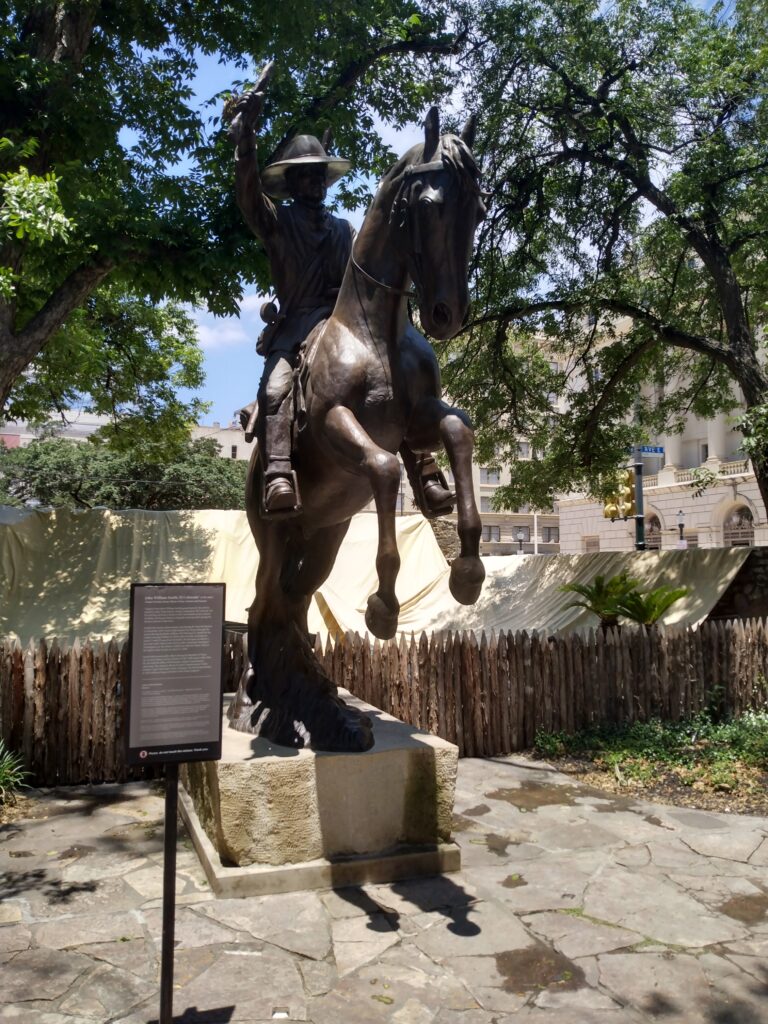
That evening, Colonel Travis sent another messenger, John W. Smith, to the convention at Washington. Fannin would not come to their aid, but perhaps the government leaders would do something to help them.
March 4, 1836
March 4th seems to have been a mostly-quiet day for the men of the Alamo. The Mexican bombardment still continued, but little of importance happened inside the walls of the Alamo. But in the enemy camp, much was happening.
President Santa Anna called a council of war, and he and his generals began making plans for the final assault. Though the whole army was not yet in Béxar, enough was for them to launch the attack.
While the officers planned, the enlisted men were set to work making ladders. These would be used for scaling the walls.
From the walls of the Alamo, the Texians could see these preparations, and they knew that the attack would be coming soon. Would help arrive in time?
March 5, 1836
The evening of March 5th, the continuous cannonade of the Mexican artillery died away. Inside the walls of the Alamo, the Texians wondered what this ominous silence meant. Were the Mexicans merely in need of some rest? Or were they preparing for an attack in earnest?
In the silence of evening, Colonel Travis called all the men together and addressed them. He said their situation was now desperate and it did not look as though any more help would be arriving. He told the men that they could either surrender, attempt to escape, or fight to the death. But he would continue fighting, for as long as the fort held out. The Mexicans could not be allowed to continue farther into Texas to crush the revolution. He encouraged his men to join him in fighting to the end.
The Line in the Sand
According to legend, at this time Travis drew his sword and used the blade to draw a line in the sand, telling the men that whoever wished to fight could cross the line and stand with him. We do not know if this actually happened or not, but it very well could have. Ben Milam had done this with his rifle before the battle of Béxar, and it could have inspired Travis to do the same thing.
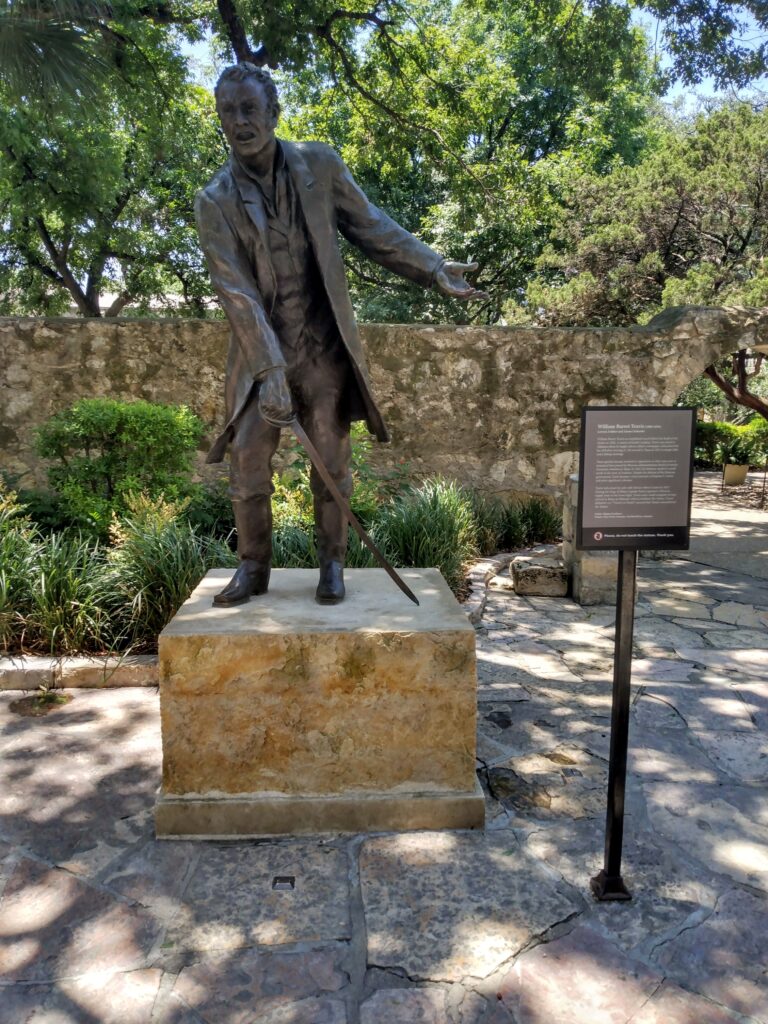
While we don’t know exactly what happened, we do know what the decision of the men was. All but one of them chose to fight to the death. One man chose to escape, and under cover of darkness, he scaled the walls. He also has gone down in history as a coward because he chose to abandon his comrades.
That night, Colonel Travis sent one last messenger, this time with a message for Fannin. Once again, he was going to try to bring reinforcements to the aid of himself and his men. But by this point, no reinforcements could arrive in time, for the final battle was only a few hours away.
March 6, 1836
In the early-morning hours of March 6th, 1836, all was quiet inside the Alamo. The men slept, worn out by the days of continuous artillery fire. Only one man, John Baugh, was awake and on guard. Around 5:30, he heard shouts of “Viva la Republica!” and “Viva Santa Anna!” At once, Baugh rushed to Travis’s headquarters, waking him with the cry of “Colonel Travis, the Mexicans are coming!”
The colonel sprang from his cot and rushed out into the courtyard, followed by Joe, his young servant. He shouted, “Come on, boys! The Mexicans are on us!”
The men rushed to their positions, but the night was dark and they could see little. After preparing a cannon, they fired it in the direction the sounds came from, and by the momentary light of its fire, they saw swarms of Mexicans approaching the walls. This was an attack in earnest.
Colonel Travis mounted to the wall, and fired both barrels of his shotgun into the ranks of the enemy below. As he reloaded, a cannonball struck him, and he fell from the wall. After seeing his master killed, Joe was so disheartened that he took refuge in one of the houses, still firing upon the Mexicans after they made it inside the fort. The Mexicans thought he had not taken part in the fight and so spared his life, making him one of the sole Texian eyewitnesses of the final attack.
The Alamo Falls
After hard fighting and many losses, the Mexicans entered the Alamo, swarming over the walls in droves. The Texians were forced to retreat into the barracks and the chapel, leaving their artillery in the hands of the enemy. The Mexicans quickly took control of them and used the guns on the Texian soldiers.
The Texians fought hard and bravely, but such a one-sided fight could have but one end. After ninety minutes, the fort was in the hands of the Mexicans and the Alamo defenders had been killed. The siege of the Alamo had ended. The Alamo had fallen, but the men would be remembered for their heroism and bravery. America and Texas would remember the Alamo and avenge the deaths of her defenders.
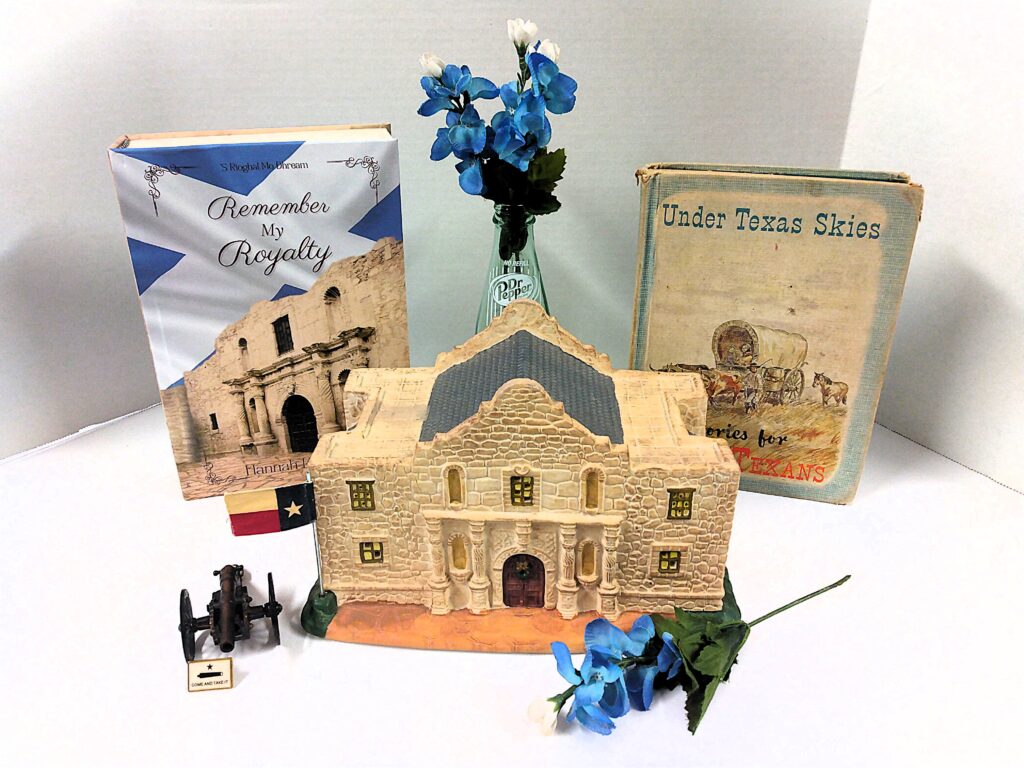
If you didn’t already know the significance of the date I chose to release Remember My Royalty, now you do! It commemorates the 190th anniversary of the fall of the Alamo. If you want to learn more about the Texas Revolution and the siege of the Alamo, check out my book. I like to call it historical fiction that is more historical than fiction. I’ve stayed as close as possible to what actually happened throughout the war, making the book as historically accurate as possible.
If you’re interested in the book, don’t wait to look into buying it! Tomorrow is the last day to get it for the discounted price. It’s also the last day to get the pre-order goodies.